

Big Ideas,
Real Impact.
Driven by curiosity and built on purpose, this is where bold thinking resides.
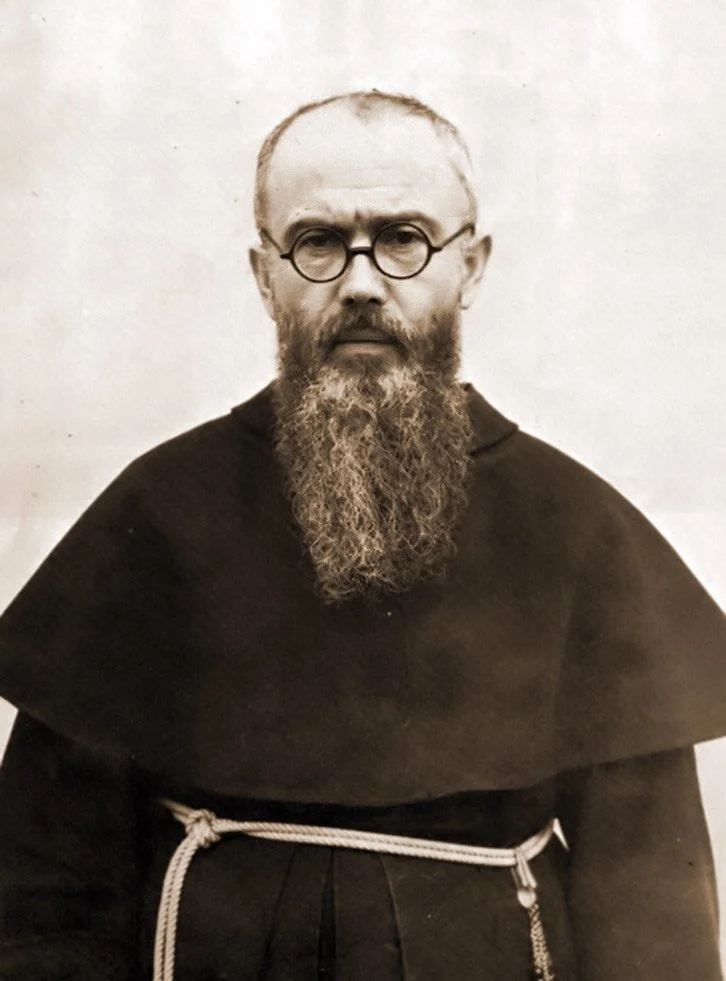
What he stepped forward for
The man selected to die was crying.
Not from weakness. Franciszek Gajowniczek was a Polish soldier, not a man given to easy tears. But he had a wife. He had children. And standing in the courtyard of Block 11 at Auschwitz in the summer of 1941, he understood that he would never see them again.
The SS commander had finished counting. Ten men. One for every prisoner who had escaped the previous night. That was how it worked — collective punishment, the arithmetic of terror. The ten would be taken to the underground bunker, stripped of food and water, and left to die. The sentence was already written. There was nothing left to do but wait for the names.
Gajowniczek was one of the ten.
Then a priest stepped forward.
He was small, frail, already visibly ill. Prisoner number 16670. He walked toward the commander and said, quietly, that he was a Catholic priest. That he was old. That the other man had a family. He asked to take his place.
The commander stared. No one did this.
He shrugged and said yes.
The priest was Maximilian Kolbe — Franciscan friar, founder of Niepokalanów, the largest Catholic publishing operation in the world before the war. A man who had already surrendered everything to the Church before the Nazis stripped away his habit and his name and replaced them with a number. He had arrived at Auschwitz in February 1941. He had been there five months when he stepped forward.