

Big Ideas,
Real Impact.
Driven by curiosity and built on purpose, this is where bold thinking resides.
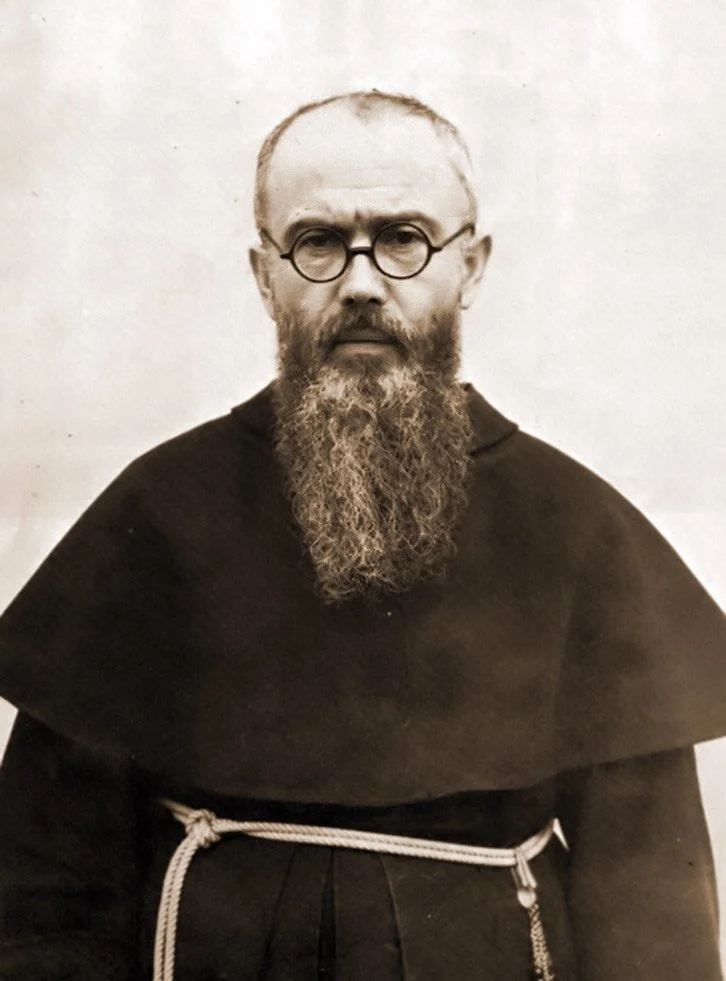
What he stepped forward for
The man selected to die was crying.
Not from weakness. Franciszek Gajowniczek was a Polish soldier, not a man given to easy tears. But he had a wife. He had children. And standing in the courtyard of Block 11 at Auschwitz in the summer of 1941, he understood that he would never see them again.
The SS commander had finished counting. Ten men. One for every prisoner who had escaped the previous night. That was how it worked — collective punishment, the arithmetic of terror. The ten would be taken to the underground bunker, stripped of food and water, and left to die. The sentence was already written. There was nothing left to do but wait for the names.
Gajowniczek was one of the ten.
Then a priest stepped forward.
He was small, frail, already visibly ill. Prisoner number 16670. He walked toward the commander and said, quietly, that he was a Catholic priest. That he was old. That the other man had a family. He asked to take his place.
The commander stared. No one did this.
He shrugged and said yes.
The priest was Maximilian Kolbe — Franciscan friar, founder of Niepokalanów, the largest Catholic publishing operation in the world before the war. A man who had already surrendered everything to the Church before the Nazis stripped away his habit and his name and replaced them with a number. He had arrived at Auschwitz in February 1941. He had been there five months when he stepped forward.
The Goose and the Swan
A few days ago I started writing this with a blizzard outside my window. Over twelve inches of March snow, the kind that arrives without apology, canceling school, bending the lilacs flat against the fence. Today it is gone. Sixty degrees. The first day of spring.
That matters for what comes next.
In the summer of 1415, a Czech priest named John Huss was burned alive in the city of Constance. He had been promised safe passage — a hearing before the church council, the chance to defend what he had preached for years. The promise was broken. He stood chained to a post in a meadow outside the city walls, wood stacked to his chin, and died singing.
Before the fire was lit, he made a prophecy.
The Town of Silence
There’s a moment in the St. George chapter that I almost cut from the book. Not because it didn’t work — because it worked too well. It made me uncomfortable, and that’s usually a sign you’re onto something.
It’s not about George himself. It’s about the town he left behind.
Diocletian’s persecution of Christians in the Roman Empire didn’t happen all at once. It started with an edict. Then another. Then another. First, churches were to be destroyed. Then scriptures burned. Then clergy imprisoned. Then everyone — every citizen — was required to sacrifice to the Roman gods or face consequences.
But here’s the thing most people don’t understand about persecution: it doesn’t need to reach everyone. It only needs to reach enough people that the rest go quiet on their own.
We Stopped Teaching History. We Started Teaching Opinions About It.
I've spent the last two years writing about people who stood for something when standing cost them everything. Fourteen figures across two thousand years for Courage to Stand: Across the Ages. Now a deeper dive into the American founding for Planting Courage. Hundreds of primary sources. Thousands of pages of letters, court records, sermons, legislative debates, and personal diaries.
And the thing I can't shake isn't what these people did. It's how little we know about them, and how much they accomplished.
Not the names. We know the names. Well mostly. Ask any eighth grader about John Adams and you'll get "second president." Ask about William Penn and you might get "Pennsylvania." Ask about Anne Hutchinson and you'll get silence. Ask about Eliza Lucas Pinckney — the woman who built South Carolina's indigo industry at seventeen — and you'll get a blank stare. The names survive, barely. The stories don't.
We have a history problem in this country, and it goes deeper than curriculum battles or textbook debates. We have stopped treating history as a discipline that requires patience, context, and humility. We have replaced it with something faster, easier, and far less useful — moral scorecarding from the comfort of the present tense.
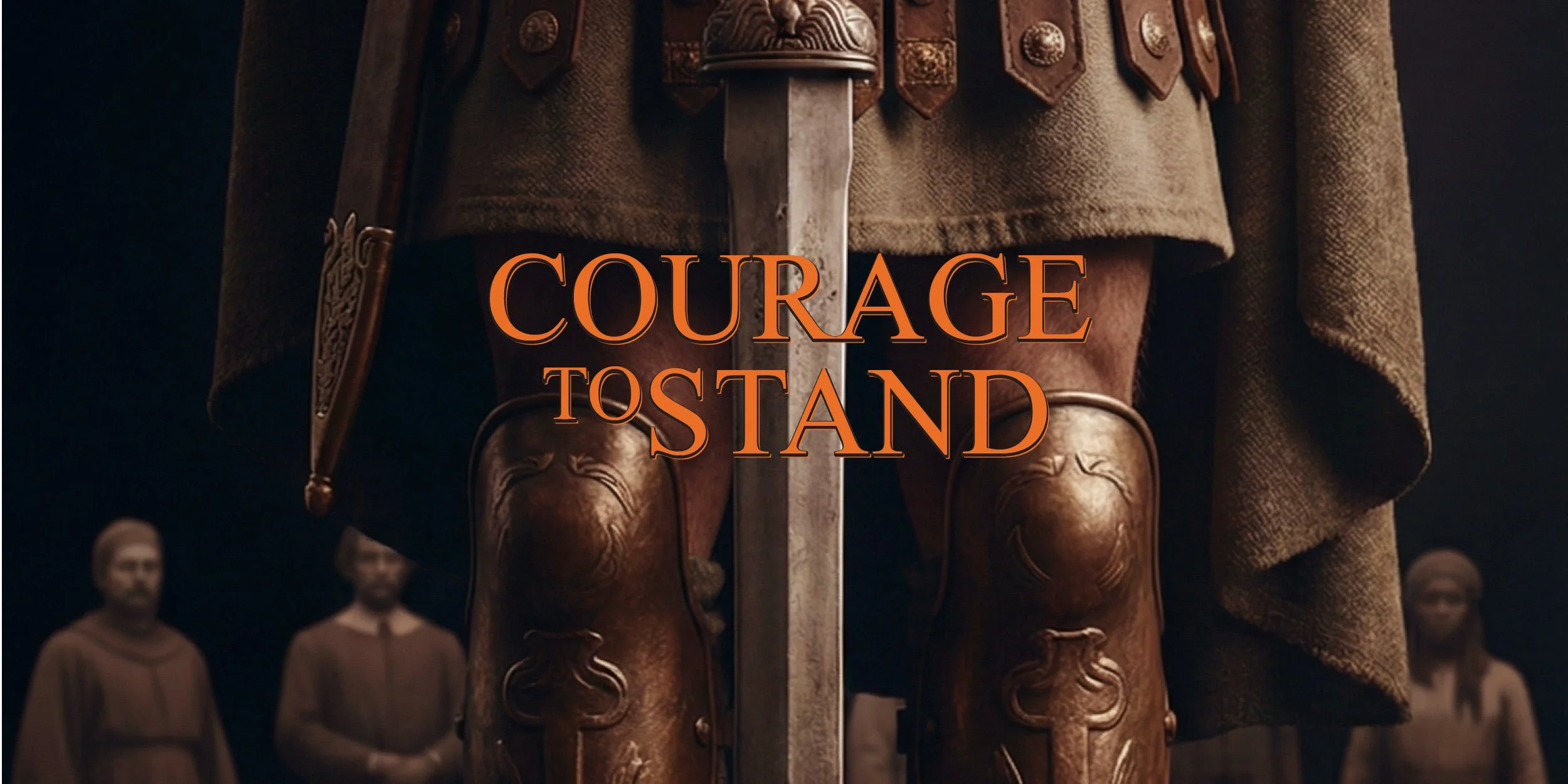
Why I Wrote This Book
It started with St. George.
Not the legend — not the dragon or the princess or the white horse. The real George. A Roman tribune in the third century who stood before Emperor Diocletian and refused to sacrifice to gods he didn’t believe in. He had everything a man could want — rank, reputation, a career most soldiers would kill for. And he threw it all away for nine words he wouldn’t unsay.
I couldn’t stop thinking about that.
I wasn’t trying to write a book. I was sitting in my favorite chair late one night, long after the kids were in bed — and while three of my ten kids are still at home, “long after the kids are in bed” is practically tomorrow — scrolling through the noise that passes for public conversation these days. And a question surfaced that I couldn’t shake:
Where are heroes like George today?